
LAND
Author: Maggie O’Farrell
Call number: FIC OFA
Reviewer: Andy Jackson
Date: October 12, 2026
Throughout my life, I have always been amazed how frequently I’ve chosen to read a book that I’ve needed to at that exact time. It took a little effort to see where Land was leading the audience, but once the destination was fixed, I was completely on board.
The novel opens in 1865 Ireland, which is still recovering from “The Great Hunger”, which killed an estimated one million people from starvation and other related causes. Some authors and historians, such as Cecil Woodham-Smith even blame the British government for exacerbating an already tragic situation. A main character, Tomas, is a mapmaker who has been contracted by the British government to survey the land. Liam, his less than enthusiastic 10-year-old son, is helping him when they both discover an uncharted thicket nearby. Tomas’s perception of reality is forever changed when he exits the mysterious area. The fate of his small family is changed irreversibly, too.
What unfolds next is the story of a particular family that inhabits the land, but it is also just one in a long line of many generations of families that occupy it. It is a similar construct to the movie Here, with Tom Hanks and Robin Wright, but it is crafted more skillfully. Generally, the plot moves forward without sentimentality. However, the reader cannot help to be moved by the lack of control that the characters have over the events that shape them. After reading this novel, it is obvious how finite our lives really are—and it is the land that will outlast us all.

THE LAND AND ITS PEOPLE
Author: David Sedaris
Call number: 814.54
Reviewer: Andy Jackson
Date: October 9, 2026
I used to be a faithful viewer of CBS Sunday Morning, which is where I first encountered David Sedaris. He would occasionally be featured in segments and would provide social commentary that I usually found insightful. The Land and its People is a series of essays that is essentially an uncensored version of the content he presented on network television—and on a much
broader set of topics.
In the book, he approached his essay subjects that include his relationships with many people, including his boyfriend Hugh and his siblings, with sarcasm, affection, and even wonderment. The common thread with these musings is an honest appraisal (from his point of view) about where he fits into America, and even the world.
Never apologetic, he does have a stubborn streak, which he is proud to display. For example, while on a safari trip to Kenya, he refuses to take any pictures. He writes that he just wants to be in the moment and to savor what unfolds on the trip, and we can probably all learn something from that.
I enjoyed parts of this collection of essays, but it was hard for me to get his distinctive speaking voice out of my head while I was reading it. In fact, although I do appreciate his perspectives, it may be enough for me to hear his abridged thoughts like I used to on Sunday mornings.
THE GALES OF NOVEMBER
Author: John U. Bacon
Call number: 910.453 BAC
Reviewer: Andy Jackson
Date: October 8, 2026
This past April, I was fortunate to hear John U. Bacon speak to an overflowing crowd on Adrian College’s campus about his latest book, The Gales of November. His talk lasted for over an hour, but it was clear that he had a lot more to say about this seminal and tragic event in the history of the Great Lakes. By the time I was able to read the book, however, it was mid-August and Ihappened to be camping with my wife near Munising, Michigan, which is located on the shores of Lake Superior (also known as Lake “Gitche Gumee” in the Ojibwe Language). Three days of our trip included time on the storied body of water, including some kayaking. The only waves that we experienced while kayaking were less than two feet high, and those were from the wakes of the boats taking tourists to see Pictured Rocks National Lakeshore and some local shipwreck sites. They were noticeable, and our professional guide said that most people start experiencing nausea when the waves get to be about five feet. The freighter Edmund Fitzgerald attempted to navigate waves estimated at more than 50 feet on November 10, 1975, and it was transporting approximately 26,000 tons of iron ore. Seasickness was the least of their worries on that night.
Many people who live in the Great Lakes Region and beyond are aware of the sinking of the Edmund Fitzgerald, which took the lives of all 29 crew members. National news coverage was ubiquitous at the time, and the somewhat mysterious causes of what proved to be the last large-scale shipwreck on the Great Lakes to the present day led to endless speculation about its final harrowing moments before descending several hundred feet to the bottom of Lake Superior. But Bacon’s purpose in fully investigating the Great Lakes shipping industry (including its importance to our national security) while also revealing detailed profiles of many of the individual crew members is noteworthy. In fact, the circumstances of the freighter’s last voyage are not conveyed until approximately the last quarter of the book. As a result, we bond with the crew, their friends and family—and even the Edmund Fitzgerald itself. A thorough explanation of the surprising origins of Gordon Lightfoot’s haunting ballad about the incident is an unexpected bonus.
One of the highest compliments that I have for authors is if they create something that I think about, even when I’m not reading it. This was one of those books for me.
SUNRISE ON THE REAPING
Author: Suzanne Collins
Call number: FIC COL
Reviewer: Andy Jackson
Date: October 6, 2026
I asked a library director recently how long Suzanne Collins would continue producing more titles in the Hunger Games franchise, and his response was: “As long as people keep buying her books in such large quantities!” He Is probably right about that, but the suspense and character development that Collins unveiled in Sunrise on the Reaping displays the high quality of writing
that is as good or better than any other book in the series. These are undoubtedly factors in the popularity of the series as well.
With an intricate plot set at the 50 th Hunger Games, the main character, Haymitch Abernathy, is selected as a “substitute” tribute from District 12 on his 16 th birthday. The odds are overwhelmingly against Haymitch surviving to the end of the games because instead of the usual 24 participants, the government doubles the number to 48. President Snow and Haymitch have an extended encounter because of Haymitch’s uncooperative acts early in the games, and Snow makes threats to torture him before his all but certain death.
Snow’s sinister conversation with Haymitch has the opposite effect, however. Rather than being intimidated, Haymitch makes strong alliances with fellow tributes and attempts something far bigger than merely outlasting all the other tributes until the end. If all goes well, he hopes to eventually reunite with his girlfriend, Lenore Dove Baird.
From the first time that I read The Hunger Games over a decade ago, it was difficult for me to overlook the parallels to our own society that are reflected in theirs. For example, the propaganda advanced by the Capitol government through careful editing of the televised
games is crafted to elevate the pathos needed to sway the masses towards a preconceived viewpoint. Unfortunately, even at the dawn of the age of artificial intelligence, governments or other organizations possess tools to do this more easily and convincingly than in these dystopian novels. Contemporary civilization may need heroes such as Haymitch (and eventually Katniss) to combat deceptive messaging presently, and in future times.
Sunrise on the Reaping is the Tecumseh District Library Teen Book Club choice for November 2026.
THE CARETAKER
Author: Ron Rash
Call number: FIC RAS
Reviewer: Andy Jackson
Date: September 28, 2026
I added The Caretaker to my reading list when it was first published in 2023 but was only able to read it recently. If I had known that the novel was going to be this compelling, I would not have put it off for so long. Ron Rash does an admirable job of dramatizing events that were based on real ones.
The plot involves Jacob Hampton, a young man from a wealthy family who marries a teenaged girl (Naomi Clarke) against his parents’ wishes. Soon after Naomi and he are married in the early 1950’s, Jacob is drafted into the army and is sent to fight in the Korean War, where he is wounded. Before he left for Korea, he asked one of his friends, Blackburn Gant, to watch over Naomi while he is gone. Jacob’s grievous injuries take a while to heal, and during that time, his parents devise a plan to keep the newlyweds apart when he comes home.
Rash reportedly took decades to write this novel, and it shows. It reads like poetry, and Hampton’s deceitfulness is unveiled with great care. The character development of Blackburn Gant is what I probably appreciate the most, however. He is a “caretaker” of many things, but he often fails to look after himself, at least at first. We learn the full extent of a disability that Gant has gradually, and his personality is unveiled quite slowly as well. It is worth the wait, however.
So, while I wasn’t completely enamored with the ending, I appreciated the deliberation that Ron Rash took to deliver it to the audience. When it unfolds, you won’t forget it, and it may cause you to question the boundaries of humanity’s capacity to cause harm to others.

THE LION WOMEN OF TEHRAN
Author: Kamali, Marjan
Call number: FIC KAM
Reviewer: Randy Morgan
Date: September 18, 2026
“Shir zan. Lionesses. Us. Can’t you just see it, Ellie? Someday, you and me—we’ll do great things. We’ll live life for ourselves. And we will help others. We are cubs now, maybe. But we will grow to be lionesses. Strong women who make things happen.”
This riveting novel spans the 1950s through the 70s and 80s to the present day and follows Elaheh “Ellie” Soltani and Homa Roozbeh – girls from completely different backgrounds who, at seven- year- olds, become fast friends. Thus begins the cycle of drifting and rediscovery of friendship. Set in Tehran, Iran, author Marjan Kamali addresses several important themes: classism, misogyny, and bigotry. Counter parts like feminism, activism, and immigration are integral to understanding the volatile backdrop in the Iranian Revolution.

THE SECRET BOOK OF FLORA LEA
Author: Patty Callahan Henry
Narrator: Cynthia Erivo
Call #: CD-FIC HEN
Reviewer: Sonja Downey
Date: August 6, 2026
When Hazel and her little sister Flora are being evacuated from war-torn London to the Oxfordshire countryside, Hazel tries to alleviate Flora’s anxiety with stories of Whisperwood, an enchanted forest that only Flora and Hazel know about.
When the unthinkable happens and Flora disappears, Hazel carries the guilt for not watching her little sister more closely into adulthood. Twenty years after Flora’s vanishing, Hazel finds herself working in a rare book store. When she unpacks a delivery of special books she comes across a book by an American author. The book is about Whisperwood. Hazel is stunned to discover that this book holds her stories which she used to tell to Flora.
This discovery sets Hazel on a frantic search for her long-lost sister. Is Flora alive? Who is the author of the mysterious book about Whisperwood? What really happened during those horrific war years?
This audio book takes gentle possession of its listeners. It is not a nail biter. However, its soft, yet urgent tone is intriguing and kept me listening for hours on end. Cynthia Erivo narrates in an aloof, almost disenchanted voice which , in the beginning, I struggled with. But as the story wove on, I came to see that Erivo had perfect understanding of Hazel’s character and what she has been through.
This was my second book by Patti Callahan Henry and I liked it immensely. Henry’s writing style is very lyrical, almost poetic to a point. Her storylines are enthralling, gripping, and take full possission of the listener. The author’s understanding of WW II events and their impact on the people is admirable. I will definitely search out more titles by Patti Callahan Henry.
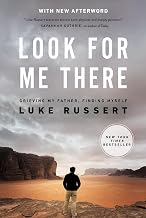
LOOK FOR ME THERE
Grieving my Father, Finding Myself
Author: Luke Russert
Call number: 921 RUS
Reviewer: Andy Jackson
Date: August 25, 2026
I’ve been watching Sunday morning news shows for most of my adult life (and maybe even a little bit before that), but when Tim Russert hosted NBC’s Meet the Press from 1991-2008, he was by far my favorite of all the hosts. His ability to interview guests from both sides of the political aisle directly and with class was unmatched. In addition, while it was clear that he took his job as a journalist seriously, he had a great sense of humor and an unwavering love of all things Buffalo—especially his beloved Bills.
Russert’s death from a heart attack at age 58 was a tragic event that obviously had an enormous effect on his wife Maureen and son Luke, the latter of whom seeks some level of acceptance and meaning regarding the loss of his iconic father in Look for Me There.
One thing that I liked about Luke Russert’s approach to this book was that he started with the chaotic circumstances of his father’s death, which happened when Luke and his mother were out of the country. After that unforgettable start, Luke reveals that he and his father had an unusually close relationship. As an only child, he had nearly unlimited access to his father’s world, which included frequent exposure to national and even international leaders who were part of the Meet the Press orbit.
But it is clear throughout the book that both Tim and “Big” Russ Russert (Luke’s grandfather) had an enormous impact on Luke well beyond what is typical for most of us. Ultimately, these influences, at least in part, cause him to abruptly quit his broadcasting career to travel the country and the world in his quest to find out who he really was. His journeys take him to six continents over three years, and he clearly does conquer some demons that haunted him.
Look For Me There has a lot of travel in it (from Maine to the Easter Islands), but it is far more than a guidebook. It is really a reflection of a young man trying to break free of his legacy while also being guided by it. In the end, I admire Russert for at least attempting the feat of knowing himself better.
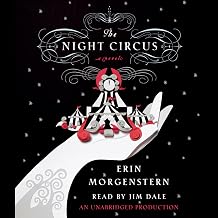
THE NIGHT CIRCUS
Author: Morgenstern, Erin
Call number: FIC MOR
Reviewer: Randy Morgan
Date: August 1, 2026
Le Cirque des Rêves seemingly comes from nothing and disappears just as fast. All part of the performance between Celia and Marco, two competing magicians. The only rule is: do not directly interfere with the opponent. Their work is a language in itself, both captivating and exhausting, but a winner must be declared.
The Night Circus was recommended to me several times over many years, so when it popped up on my Libby as “available now” I borrowed it and started it without hesitation. Going into the book without any idea what to expect (because I did not read the blurb), was a magical experience. The unfolding of Le Cirque des Rêves was a mystery from beginning to end, and had me hooked the entire time. I found myself setting it down to savor the first reading experience.