
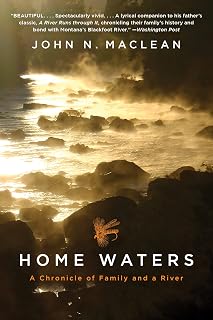
HOME WATERS
A Chronicle of Family and a River
Author: John N. Maclean
Call number: 921 MAC
Reviewer: Andy Jackson
Date: November 17, 2026
Approximately half-way through Home Waters, I realized that I had already read a book by John N. Maclean. It was Fire on the Mountain: The True Story of the South Canyon Fire, which chronicled the tragic deaths of fourteen firefighters on Storm King Mountain, Colorado in 1994. The impetus for me reading that one was that I had taught the book Young Men and Fire, by Norman Maclean (John’s father), better known to most as the author of A River Runs Through It and Other Stories. A River Runs Through It is a legendary and influential novella that is a classic today, and John Maclean demystifies it successfully in Home Waters–while also sharing a glimpse into the complexity of the Maclean family dynamics.
In the early 1920’s, Reverend John Maclean (John N.’s grandfather), built a cabin that served as an informal family headquarters. It is on Seeley Lake, which is near the Big Blackfoot River in Montana. He was assisted by his wife Clara, Norman, and Paul (John and Clara’s youngest son). The cabin lacks running water, electricity or a telephone, but it is still in use. Generations of Macleans have utilized it over the years and have participated in many traditions revolving around storytelling and fishing, in particular. And just like in the A River Runs Through It, the audience learns the most about Paul through glimpses of him fishing on the Montana rivers. We also discover why Norman Maclean altered events for his novella that led up to the still unresolved mystery of Paul’s time in Chicago.
Although by no means an “expert” on the Maclean family, I have read a great deal about their background, and Home Waters was probably the easiest and clearest account of the family for me. Undoubtedly, this is in part because of John Maclean’s profession as a Chicago Tribune writer for 30 years, but he is also a gifted storyteller. His 1994 account of the doomed firefighters is probably not as “artsy” as his father’s attempt to resolve the Mann Gulch Fire disaster, but it is certainly more cogent. To fully appreciate Home Waters, I would recommend that one read at least some of Norman Maclean’s work first. I felt like John N. Maclean wrote Home Waters assuming that the audience was familiar with at least some of it.
DEARBORN: STORIES
Author: Ghassan Zeineddine
Call number: FIC ZEI
Reviewer: Andy Jackson
Date: November 5, 2026
In 1982, I moved from a small town in mid-Michigan to a rural community in Wayne County. For the next 40 years, I would go to the city of Dearborn or to Allen Park (on its southern border) thousands of times. And while I worked as a high school teacher in Allen Park, most of my trips to Dearborn were strictly for leisure. I soon learned that there were at least two distinct Dearborns, however. The kindest way to identify them was “West Dearborn” and “East Dearborn.” Ghassan Zeineddine’s novel focuses on East Dearborn, which is known as having the largest population of Arab Americans outside of the Middle East.
In this collection of short stories (which has some characters in recurring roles), Zeineddine develops a variety of characters through a diverse set of circumstances. In the opening story, “The Actors of Dearborn” we meet Youssef, a census taker who has close ties to the East Dearborn community. This is an effective choice for the collection because it gives the audience an opportunity to take an insider’s tour of this part of the city with Youssef as he attempts to do his job. In addition, we get multiple female perspectives of East Dearborn in “Speedoman” “Marseille” and “I Have Reason to Believe My Neighbor is a Terrorist.”
And even though some of the stories are quite graphic (the butchering of rabbits is described in great detail, for example), it would be difficult not to empathize with the Arabic population after reading them. The near constant worry of some of the characters about being arrested and deported is a prevailing theme, for example. Zineddine does an admirable job of showing both good and bad in the community, and that is something that everyone can relate to.
Dearborn was a featured book at the 2026 Michigan Library Association conference in Novi, where the author presented ideas from it and his other writings. It was also selected as a 2026 Notable Book for the State of Michigan in the same year.
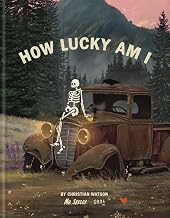
How Lucky am I
Author: Watson, Christian
Illustrator: Watson, Christian
Call number: NEW GN WAT
Reviewer: Randy Morgan
Date: November 5, 2026
“How Lucky am I” is a moment of solace written and illustrated by Christian Watson. Mr. Skelly embraces mundane activities then animates them with comfort, acceptance, and peace. He contemplates the harsh realities of life while maintaining optimism through gratuity.
Above all, a picture is worth a thousand words, and I am eternally captivated.
LET THEM LEAD
Author: John U. Bacon
Call number: 658.4092 BAC (Williamston Library)
Reviewer: Andy Jackson
Date: October 30, 2026
As a retired high school teacher who coached early in my career, I easily related to some of John U. Bacon’s experiences from Let Them Lead. My coaching career was brief, and not in as high profile a situation as he was, but the relationships formed between players and coaches are unique and can have lifelong impact. I also played sports in high school (not hockey—as portrayed in this book), and while I did play on some winning teams, many were not, especially in basketball.
Therefore, I was riveted by how the book opens with a detailed description of the author taking over the coaching reigns of one of the worst high school hockey programs in history. He relayed how this team that had not one a single game the previous season and not a whole lot more than that in its recent history was teetering on the edge of being excluded from the hockey league that they were a member of. Having been a member of a varsity baseball team that had one win (against the league champions no less) and 21 losses, I can attest that as the losing drought goes on, morale plummets exponentially. I hated baseball for a while after that season, and I felt partially responsible for it because I was a captain on that team.
And it is with the captain of the Ann Arbor Huron River Rats that Bacon begins. He realizes the importance of getting Mike Henry, a seventeen-year-old incoming senior, on board with his new coach’s philosophies. Although it certainly was not easy, his efforts with Henry proved to be key to the program’s future.
I happen to be a sports fan, but one does not have to be to appreciate this book. In every chapter, Bacon uses his multi-year experiences with the River Rats as a lens where he shares his main ideas about changing culture, building trust, and giving control with illustrations of how this worked with the team. He does an admirable job of seamlessly showing how these ideas could be implemented in every organization, including families. But he is never preachy, and he goes to great lengths to remind us that every situation is different and may not turn out the same way as they did for this hockey team.
In the final analysis, however, the main two team rules: “Work hard and support your teammates” are difficult to dispute, and difficult to misinterpret. Organizations would be wise to discard leadership lessons that are too complex in favor of the team rules.
This book was chosen by librarian Ryan Tackaberry as one of two books for the MLA book club this year. The author, John U. Bacon, will be a keynote speaker at the MLA Conference and Let Them Lead will be featured in his presentation.
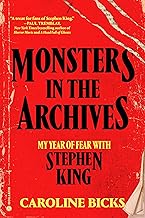
Monsters in the Archives: My Year of Fear with Stephen King
Author: Caroline Bicks
Call number: 813.54 BIC
Reviewer: Andy Jackson
Date: October 20, 2026
Just in time for Halloween, I dove into this deep analysis of the work of Stephen King, who has rightfully earned the epithet “The King of Horror.” The author, Caroline Bicks, is the Stephen E. King Chair Chair of Literature at the University of Maine, and was strongly encouraged to NOT contact King, especially after she started her new role. Ultimately, King called her a few months into her time at U of M and recommended that they meet.
The meeting led to King spending a couple of days in her classroom, mentoring young writers. And as if these encounters were not surreal enough, he offered his archives to her for academic study. Bicks carefully and painstakingly researched five of his early works (Pet Sematary, Night Shift, Salem’s Lot, The Shining, and Carrie). Even for a King enthusiast like me, I expected a dry, academic analysis that I would have to slog through, at times. However, Bicks’s ability to weave commentary about the very experience of being in King’s
One of Bicks’s academic areas of interest is Shakespearean studies, and she consistently reviews King’s work through the lens of the Bard. She even consults with King regarding the validity of her conclusions, and he amplifies her findings even further, in some cases. Bicks also explains the details of various editing choices (including alternate endings) that King and some of his editors have made. Monsters in the Archives is probably not for the casual reader of Stephen King, but for those who are fans of his and of the writing process in general, it is as illuminative as his autobiographical book from 2000, On Writing: A Memoir of the Craft.
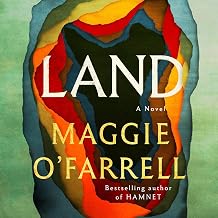
LAND
Author: Maggie O’Farrell
Call number: FIC OFA
Reviewer: Andy Jackson
Date: October 12, 2026
Throughout my life, I have always been amazed how frequently I’ve chosen to read a book that I’ve needed to at that exact time. It took a little effort to see where Land was leading the audience, but once the destination was fixed, I was completely on board.
The novel opens in 1865 Ireland, which is still recovering from “The Great Hunger”, which killed an estimated one million people from starvation and other related causes. Some authors and historians, such as Cecil Woodham-Smith even blame the British government for exacerbating an already tragic situation. A main character, Tomas, is a mapmaker who has been contracted by the British government to survey the land. Liam, his less than enthusiastic 10-year-old son, is helping him when they both discover an uncharted thicket nearby. Tomas’s perception of reality is forever changed when he exits the mysterious area. The fate of his small family is changed irreversibly, too.
What unfolds next is the story of a particular family that inhabits the land, but it is also just one in a long line of many generations of families that occupy it. It is a similar construct to the movie Here, with Tom Hanks and Robin Wright, but it is crafted more skillfully. Generally, the plot moves forward without sentimentality. However, the reader cannot help to be moved by the lack of control that the characters have over the events that shape them. After reading this novel, it is obvious how finite our lives really are—and it is the land that will outlast us all.

THE LAND AND ITS PEOPLE
Author: David Sedaris
Call number: 814.54
Reviewer: Andy Jackson
Date: October 9, 2026
I used to be a faithful viewer of CBS Sunday Morning, which is where I first encountered David Sedaris. He would occasionally be featured in segments and would provide social commentary that I usually found insightful. The Land and its People is a series of essays that is essentially an uncensored version of the content he presented on network television—and on a much
broader set of topics.
In the book, he approached his essay subjects that include his relationships with many people, including his boyfriend Hugh and his siblings, with sarcasm, affection, and even wonderment. The common thread with these musings is an honest appraisal (from his point of view) about where he fits into America, and even the world.
Never apologetic, he does have a stubborn streak, which he is proud to display. For example, while on a safari trip to Kenya, he refuses to take any pictures. He writes that he just wants to be in the moment and to savor what unfolds on the trip, and we can probably all learn something from that.
I enjoyed parts of this collection of essays, but it was hard for me to get his distinctive speaking voice out of my head while I was reading it. In fact, although I do appreciate his perspectives, it may be enough for me to hear his abridged thoughts like I used to on Sunday mornings.
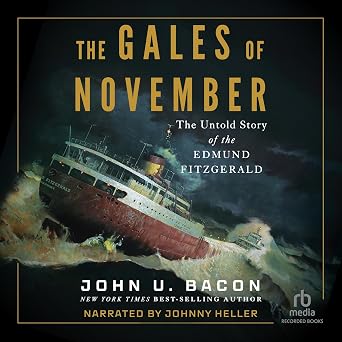
THE GALES OF NOVEMBER
Author: John U. Bacon
Call number: 910.453 BAC
Reviewer: Andy Jackson
Date: October 8, 2026
This past April, I was fortunate to hear John U. Bacon speak to an overflowing crowd on Adrian College’s campus about his latest book, The Gales of November. His talk lasted for over an hour, but it was clear that he had a lot more to say about this seminal and tragic event in the history of the Great Lakes. By the time I was able to read the book, however, it was mid-August and Ihappened to be camping with my wife near Munising, Michigan, which is located on the shores of Lake Superior (also known as Lake “Gitche Gumee” in the Ojibwe Language). Three days of our trip included time on the storied body of water, including some kayaking. The only waves that we experienced while kayaking were less than two feet high, and those were from the wakes of the boats taking tourists to see Pictured Rocks National Lakeshore and some local shipwreck sites. They were noticeable, and our professional guide said that most people start experiencing nausea when the waves get to be about five feet. The freighter Edmund Fitzgerald attempted to navigate waves estimated at more than 50 feet on November 10, 1975, and it was transporting approximately 26,000 tons of iron ore. Seasickness was the least of their worries on that night.
Many people who live in the Great Lakes Region and beyond are aware of the sinking of the Edmund Fitzgerald, which took the lives of all 29 crew members. National news coverage was ubiquitous at the time, and the somewhat mysterious causes of what proved to be the last large-scale shipwreck on the Great Lakes to the present day led to endless speculation about its final harrowing moments before descending several hundred feet to the bottom of Lake Superior. But Bacon’s purpose in fully investigating the Great Lakes shipping industry (including its importance to our national security) while also revealing detailed profiles of many of the individual crew members is noteworthy. In fact, the circumstances of the freighter’s last voyage are not conveyed until approximately the last quarter of the book. As a result, we bond with the crew, their friends and family—and even the Edmund Fitzgerald itself. A thorough explanation of the surprising origins of Gordon Lightfoot’s haunting ballad about the incident is an unexpected bonus.
One of the highest compliments that I have for authors is if they create something that I think about, even when I’m not reading it. This was one of those books for me.
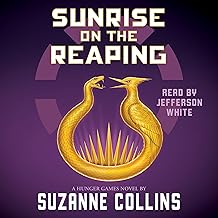
SUNRISE ON THE REAPING
Author: Suzanne Collins
Call number: FIC COL
Reviewer: Andy Jackson
Date: October 6, 2026
I asked a library director recently how long Suzanne Collins would continue producing more titles in the Hunger Games franchise, and his response was: “As long as people keep buying her books in such large quantities!” He Is probably right about that, but the suspense and character development that Collins unveiled in Sunrise on the Reaping displays the high quality of writing
that is as good or better than any other book in the series. These are undoubtedly factors in the popularity of the series as well.
With an intricate plot set at the 50 th Hunger Games, the main character, Haymitch Abernathy, is selected as a “substitute” tribute from District 12 on his 16 th birthday. The odds are overwhelmingly against Haymitch surviving to the end of the games because instead of the usual 24 participants, the government doubles the number to 48. President Snow and Haymitch have an extended encounter because of Haymitch’s uncooperative acts early in the games, and Snow makes threats to torture him before his all but certain death.
Snow’s sinister conversation with Haymitch has the opposite effect, however. Rather than being intimidated, Haymitch makes strong alliances with fellow tributes and attempts something far bigger than merely outlasting all the other tributes until the end. If all goes well, he hopes to eventually reunite with his girlfriend, Lenore Dove Baird.
From the first time that I read The Hunger Games over a decade ago, it was difficult for me to overlook the parallels to our own society that are reflected in theirs. For example, the propaganda advanced by the Capitol government through careful editing of the televised
games is crafted to elevate the pathos needed to sway the masses towards a preconceived viewpoint. Unfortunately, even at the dawn of the age of artificial intelligence, governments or other organizations possess tools to do this more easily and convincingly than in these dystopian novels. Contemporary civilization may need heroes such as Haymitch (and eventually Katniss) to combat deceptive messaging presently, and in future times.
Sunrise on the Reaping is the Tecumseh District Library Teen Book Club choice for November 2026.